Early Speech Language Development Guide: A Vital Resource for Educators and Caregivers
Supporting early speech language development is a critical aspect of nurturing young children's communication abilities. The Early Speech Language Development Guide offers a comprehensive, visually engaging tool that empowers educators, speech-language pathologists (SLPs), parents, and early intervention professionals to monitor and enhance communication milestones with confidence. This guide is more than just a reference—it’s a practical roadmap designed to align with modern educational practices and evolving developmental expectations.
With the increasing focus on early childhood education and the growing awareness of the importance of communication skills, tools like this guide are becoming essential in both traditional and digital learning environments. Whether used in PreK–2 classrooms, homeschool settings, or during individual therapy sessions, the Early Speech Language Development Guide provides an accessible, evidence-informed approach to tracking progress and identifying areas that may need additional support.
The Importance of Early Speech Language Development
Speech and language development form the foundation for academic success, social interaction, and emotional well-being. Early identification of delays or challenges can lead to timely interventions, which significantly improve long-term outcomes for children. However, understanding the complex nature of these developmental stages requires accurate information, clear benchmarks, and practical tools.
The Early Speech Language Development Guide addresses this need by offering detailed milestone charts, developmental hierarchies, and red flag indicators. These resources help professionals and parents recognize typical patterns of growth and identify when further evaluation might be necessary. For example, knowing when a child should begin using two-word phrases or understand basic WH-questions can make a significant difference in early intervention efforts.
What Makes This Guide Unique?
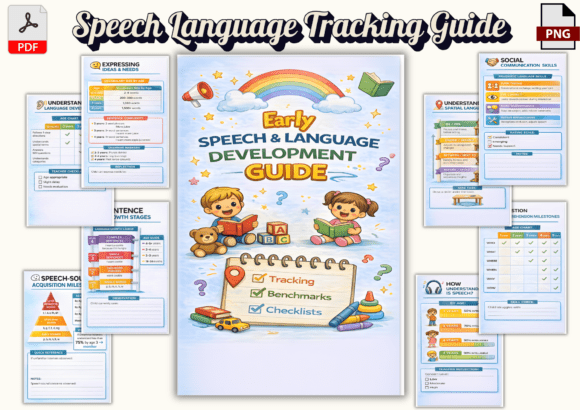
This guide stands out due to its thoughtful design and adaptability across various formats. The 6x9 vertical layout ensures clarity and ease of use, making it ideal for quick reference during classroom observations, parent meetings, or therapy sessions. The inclusion of high-resolution PDF files and individual PNG images allows for seamless integration into digital planners, presentations, or online platforms—meeting the needs of today’s tech-savvy educators and professionals.
The guide includes a wide range of content tailored to different aspects of speech and language development. From phonological awareness pyramids to narrative development stages, each section is crafted to provide actionable insights. For instance, the articulation intelligibility guide helps SLPs and parents assess how clearly a child is speaking, while the vocabulary benchmarks chart outlines expected word acquisition at various ages.
Key Components of the Guide
- Speech Sound Development Chart: Tracks the progression of articulation skills from infancy through early childhood.
- Phonological Awareness Pyramid: Helps educators and therapists teach foundational literacy skills related to sound recognition and manipulation.
- Receptive and Expressive Language Milestones: Offers clear indicators of what children should understand and express at each developmental stage.
- Narrative Development Stages: Provides insight into how children construct stories and convey experiences verbally.
- WH-Question Comprehension Chart: Assists in evaluating a child’s ability to answer questions that require deeper thinking.
- Vocabulary Benchmarks: Outlines expected word knowledge for different age groups, supporting early literacy readiness.
- Referral Red Flags Guide: Identifies signs that may indicate the need for professional assessment or intervention.
These components work together to create a holistic view of a child’s communication development, ensuring that no key area is overlooked. The guide also includes a practical early literacy readiness checklist, which is especially useful for educators preparing students for formal reading instruction.
Why This Guide Fits Modern Educational Needs
In today’s fast-paced educational landscape, professionals are constantly seeking efficient, effective tools that align with current best practices. The Early Speech Language Development Guide meets this demand by combining research-based strategies with user-friendly design. Its emphasis on visual learning and quick-reference summaries makes it suitable for busy educators and caregivers who need reliable information without extensive training.
Moreover, the guide supports the shift toward personalized learning and data-driven decision-making. By providing clear developmental ladders and pyramids, it enables teachers and SLPs to tailor their approaches based on individual student needs. This flexibility is crucial in diverse classroom settings where children may have varying levels of speech and language proficiency.
The digital format of the guide also caters to the growing preference for technology-integrated resources. Educators can easily upload PNG files into digital planners or presentation slides, allowing for dynamic lesson planning and progress tracking. This adaptability ensures that the guide remains relevant in both traditional and modern teaching environments.
Practical Applications Across Settings
The Early Speech Language Development Guide is not limited to a single setting—it is equally valuable in schools, homes, and clinical environments. For SLPs, it serves as a quick reference for developing treatment plans and monitoring progress. Teachers can use it to support language-rich classroom activities and identify students who may benefit from additional support. Parents, on the other hand, can track their child’s development at home and engage in meaningful conversations that promote communication skills.
During IEP meetings, the guide can be a powerful tool for outlining goals and objectives. Its structured format makes it easy to present developmental expectations and progress to parents and team members. Similarly, in classroom progress monitoring, the guide helps educators evaluate whether students are meeting key language milestones and adjust instruction accordingly.
For homeschool educators, the guide provides a structured framework for assessing language development without the need for specialized training. It encourages consistent observation and reflection, which are essential for creating a supportive learning environment.
Empowering Professionals and Families
One of the most compelling aspects of the Early Speech Language Development Guide is its ability to empower both professionals and families. By demystifying complex developmental concepts, it fosters a sense of confidence and competence in those responsible for a child’s communication growth. This empowerment is particularly important in early intervention, where timely action can make a lasting impact on a child’s future.
Additionally, the guide promotes collaboration between educators, SLPs, and parents. When all parties have access to the same information and tools, they can work together more effectively to support the child’s development. This collaborative approach is increasingly recognized as a best practice in early childhood education and intervention.
As society continues to place greater emphasis on early childhood development, resources like the Early Speech Language Development Guide will become even more vital. By equipping professionals and families with the knowledge and tools they need, this guide contributes to a brighter future for children everywhere.